The 30-Minute PAGA Audit That Could Save Your California Restaurant Millions In 2026
By Harri Insider Team |
February 2, 2026
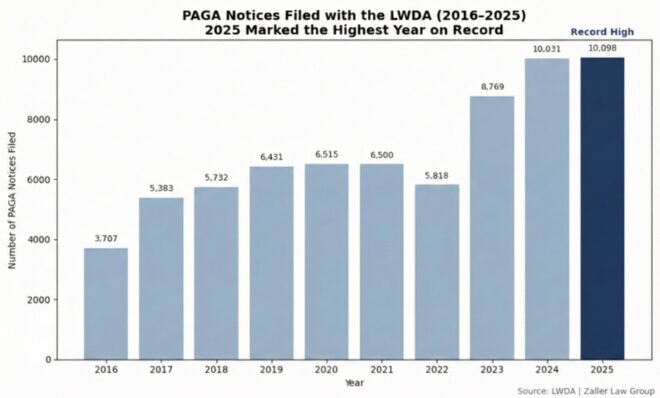
California restaurant operators just lived through the most expensive PAGA year on record. Over 10,100 cases were filed in 2025 — a staggering increase that shows no signs of slowing down despite 2024’s much-hyped reforms.
But here’s what most operators don’t realize: The 2024 PAGA reform created a massive opportunity to slash penalties by up to 85% — if you know how to use it.
The Math That Should Terrify Every California Operator
Consider this real example from our recent masterclass with Zaller Law Group and Harri:
Old PAGA penalties: 100 employees over 2 years = $2.3 million exposure
Reformed PAGA with proper documentation: Same scenario = under $200,000
The difference? Demonstrating “reasonable compliance efforts.” Without proper documentation, you’re paying full freight. With it, you cap penalties at 15-30% of the original amount.
This chart illustrates the number of PAGA notices filed with the Labor and Workforce Development Agency (LWDA) between 2016 and 2025. The data indicates a general upward trend in filings over the decade, culminating in a record high of 10,098 notices filed in 2025.
Two February Deadlines You Cannot Miss
February 1st: Know Your Rights” Notice — Every California employee must receive this notice by February 1st. You cannot just post it — it must be delivered directly to each employee via email, text, or hand delivery. Keep records proving delivery for three years.
March 30th: Emergency Contact Updates — You must give employees the opportunity to update emergency contact information and ask if contacts should be notified of workplace detention or arrest.
The 5-Step Audit That’s Saving Operators Millions
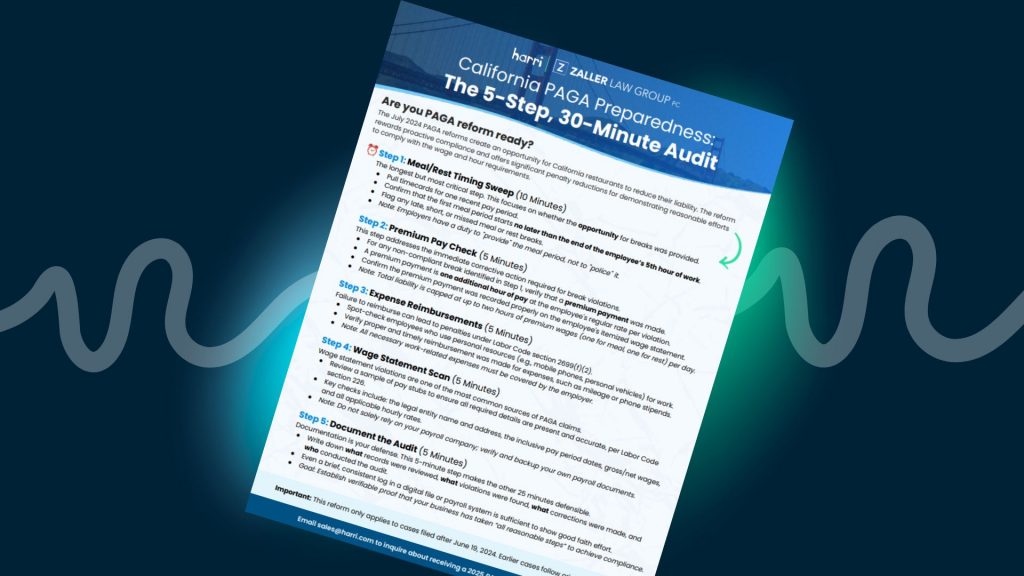
Top employment attorneys recommend this 30-minute weekly audit to build your reasonable compliance defense. Email marketing@harri.com if you’d like one of our compliance experts to guide you through the audit.
1. Meal & Rest Break Compliance Check
Biggest PAGA target: Missed meal breaks still account for most violations
Action: Use electronic timekeeping with automatic attestations
Audit pay stubs for all required elements (employee info, pay periods, rates, deductions)
Don’t trust your payroll company — ultimate responsibility is yours
Include premium payments on pay stubs for clear tracking
3. Final Pay Compliance
Terminated employees: Final check due at time/place of termination
Resigned employees: 72-hour rule applies unless proper notice given
Include all wages, accrued vacation, bonuses, commissions
4. Policy & Training Documentation
Update wage/hour policies at least yearly
Train supervisors on compliance basics — document who attended
Create clear off-the-clock work prohibitions
5. Corrective Action Records
Key insight: Don’t hide violations — lean into them
Document when issues are found and how they’re corrected
Discipline repeat policy violators to show enforcement
Technology Is Your New Best Defense
In 2026, one thing is for sure, manual processes are litigation landmines: “We live in the digital age. There’s no reason to track anything on pen and paper,” said Samantha Gallagher.
Smart operators are implementing:
Automated break tracking and attestations
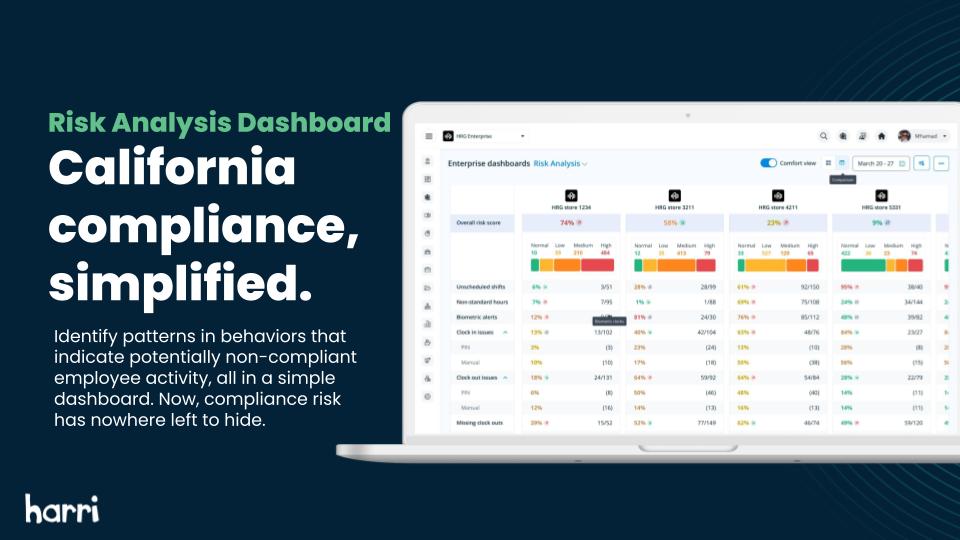
Real-time compliance dashboards
Digital documentation systems
Automatic premium pay calculations
The Reality Check: Why Cases Keep Rising
Despite reform benefits, PAGA filings increased 15% in 2025. Why? Plaintiff attorneys are filing more cases to compensate for reduced per-case payouts. Translation: Your risk of being targeted is higher than ever.
Your Action Plan for 2026
Immediately: Implement the February 1st notice requirement
This week: Start weekly 30-minute compliance audits
This month: Review and update all wage/hour policies
Ongoing: Document every compliance effort you make
Remember: The reformed PAGA isn’t about whether violations occurred — it’s about what you did to prevent them. Start building that documentation trail now, because in California’s current enforcement environment, it’s not if you’ll face a PAGA claim, it’s when.
Fill out the form below and we'll be in touch soon.
Exclusive content delivered to your inbox!
Become an Insider in the Hospitality Industry and receive content that matters to you. Subscribe to Harri Insider and get access to the latest labor-related research, panels, trends, and more.
Discover Harri
Speak with a hospitality workforce expert to see what Harri can do for you! Fill out your info, and we’ll be in touch soon to get it all set up!
Discover Harri Es
Speak with a hospitality workforce expert to see what Harri can do for you! Fill out your info, and we’ll be in touch soon to get it all set up!
Discover Harri ru
Speak with a hospitality workforce expert to see what Harri can do for you! Fill out your info, and we’ll be in touch soon to get it all set up!
Contact Sales Es
Speak with a hospitality workforce expert to see what Harri can do for you! Fill out your info, and we’ll be in touch soon to get it all set up!
Contact Sales Ru
Speak with a hospitality workforce expert to see what Harri can do for you! Fill out your info, and we’ll be in touch soon to get it all set up!
Contact Sales
Speak with a hospitality workforce expert to see what Harri can do for you! Fill out your info, and we’ll be in touch soon to get it all set up!