Beyond Prediction: Why Your Frontline Managers Need a Partner, Not Just a Platform

- By Harri Insider Team | January 15, 2026
In the boardrooms of British hospitality, the conversation has shifted. It is no longer just about growth; it is about viability. With the National Living Wage climbing and indirect costs like National Insurance squeezing margins tighter than ever, the cost of employing people has become the single biggest line item on the P&L.
But let’s step out of the boardroom and walk into the General Manager’s office, or more likely, the back corridor where they’re checking schedules on a mobile while at the pass.
For the frontline manager, “efficiency” isn’t a metric; it’s a survival mechanism. They are drowning in data but starving for insight. They have a rota system, an ATS, a payroll provider, and an engagement survey tool. They are trying to be data analysts, HR directors, and operations leaders all at once.
This is where the industry often fails them. We give them tools, point solutions that do one thing very well and expect them to be the bridge that connects the dots. We ask them to predict the future based on fragmented pasts.
At Harri, we believe there is a better way; we believe managers should be given the space and ability to focus on their job and bring the human touch a restaurant operation thrives on. This is why at Harri we are harnessing the power of AI to serve our clients. We believe in the Power of Platform, and we believe it’s time you met Salli.

Meet Salli: The Difference Between Prediction and Anticipation
Imagine a manager, Sarah, running a busy gastropub in Manchester. It’s Thursday. The forecast says rain, a local football match has been rescheduled, and her sous chef has just handed in their notice.
In a world of point solutions, Sarah is frantically logging into her scheduling tool to cut hours, then her ATS to repost the chef job, and checking her engagement tool to see if the rest of the kitchen team is at risk of leaving. She is reacting. She is predicting disaster and trying to mitigate it.
With Harri, Sarah has Salli.
Salli is the interface of Harri Agentic AI. She isn’t just a chatbot; she is the ultimate manager assistant who can pull all the end to end data, insights, actions together to surface what really matters. Because Harri sits across Talent Acquisition, Workforce Management, and Engagement, Salli doesn’t just predict what might happen; she anticipates what needs to be done.
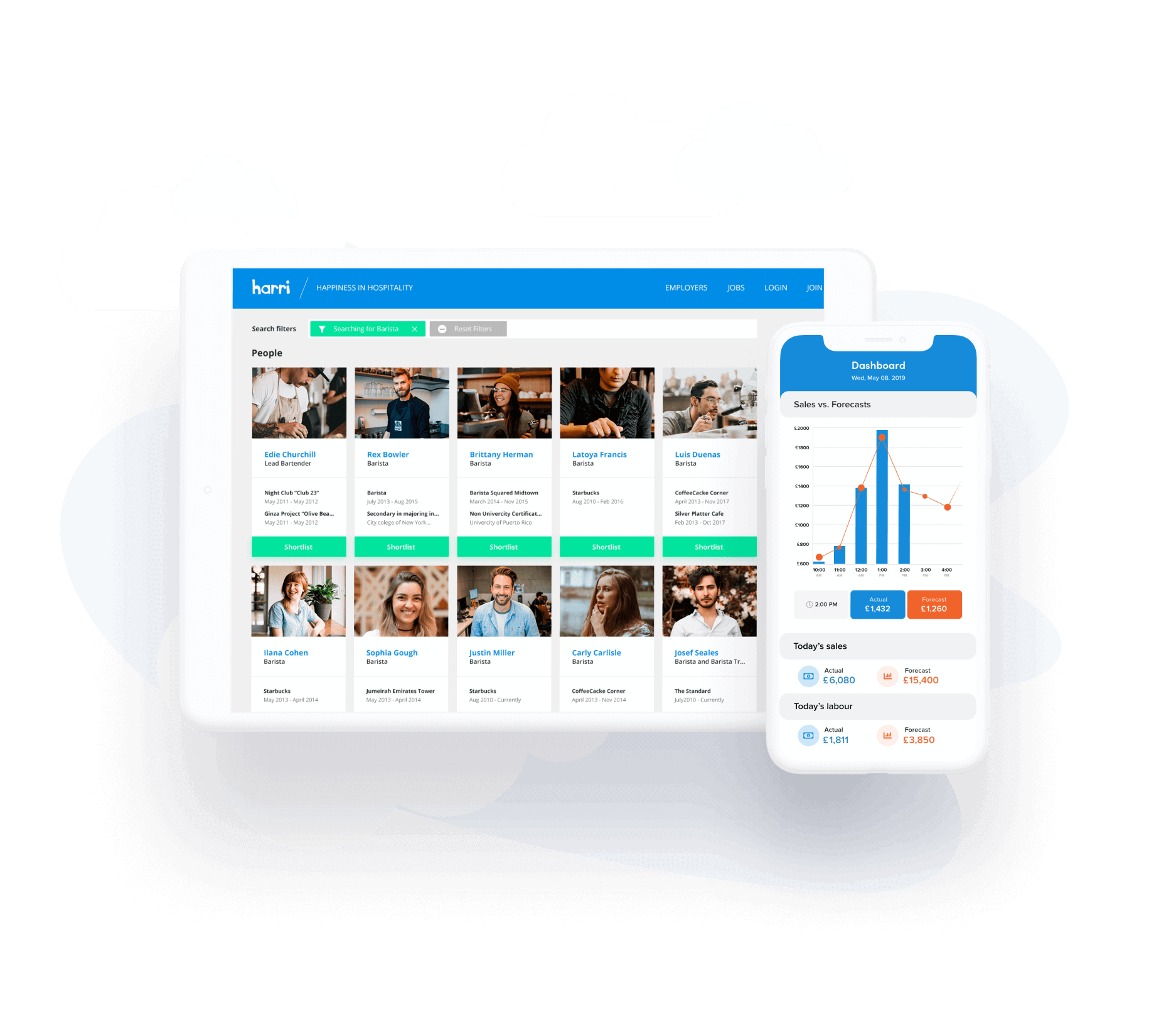
- Salli knows the context: She sees that footfall drops by 15% when it rains on match days in this specific location. She doesn’t just surface data; she proactively suggests adjusting the staffing levels down to the 15-minute interval, saving labour costs without sacrificing service.
- Salli knows the talent: She knows the sous chef has left. But because she lives in the same platform as your Talent Pool, she doesn’t just wait for a job post. She anticipates the gap and suggests “Smart Matching” candidates from your existing database who are qualified and available, reducing time-to-hire and agency spend.
- Salli knows the risk: When Sarah tries to cover the gap by asking a junior commis chef to double-shift, Salli gently intervenes. She flags that this would trigger a labour compliance rule before the schedule is published, protecting the business from costly compliance fines.

Empathy at Scale
This is not about replacing the manager; it is about supporting them with empathy. True empathy in software design means understanding that a manager’s time is finite and their cognitive load is heavy.
When you rely on a “Franken-stack”, a rota system stitched to an HRIS stitched to an ATS, you are forcing your managers to do the mental gymnastics of integration. You are asking them to translate the language of one system to another.
An end-to-end platform like Harri removes that burden. It creates a single, continuous journey for the employee and the manager.
- For the Employee: Their journey from “Applicant” to “Shift Leader” is seamless. The data entered during onboarding flows directly into the schedule and payroll. There is no re-keying, no “computer says no” errors. They feel seen and valued because the system remembers who they are.
- For the Employee: Salli notes all of the employees preferences right from the application process and uses those to support the manager when rota’s are being built, flagging up when a shift is allocated that cannot be fulfilled. This makes the employee feel seen and heard from day one.
- For the Manager: Salli acts as the co-pilot. She surfaces insights, not just raw data. When she notices a dip in sentiment from the new “Job Satisfaction Follow-Up Touchpoints”, she prompts the manager to have a coffee with the team member, preventing turnover before it happens.
The Conclusion: The Whole is Greater Than the Sum of Its Parts
In a market where every percentage point of margin matters, the inefficiency of point solutions is a luxury you cannot afford. You cannot optimise labour if your scheduling tool doesn’t talk to your sales forecast in real-time. You cannot improve retention if your engagement data is locked away from your performance management data.
Harri’s workforce management capabilities are not just “features”; they are the engine room of a unified employee experience platform. By choosing an end-to-end solution, you are not just buying software; you are buying your managers the gift of time and the power of anticipation.
You are giving them Salli. And Salli knows, because Harri knows.